The business problem
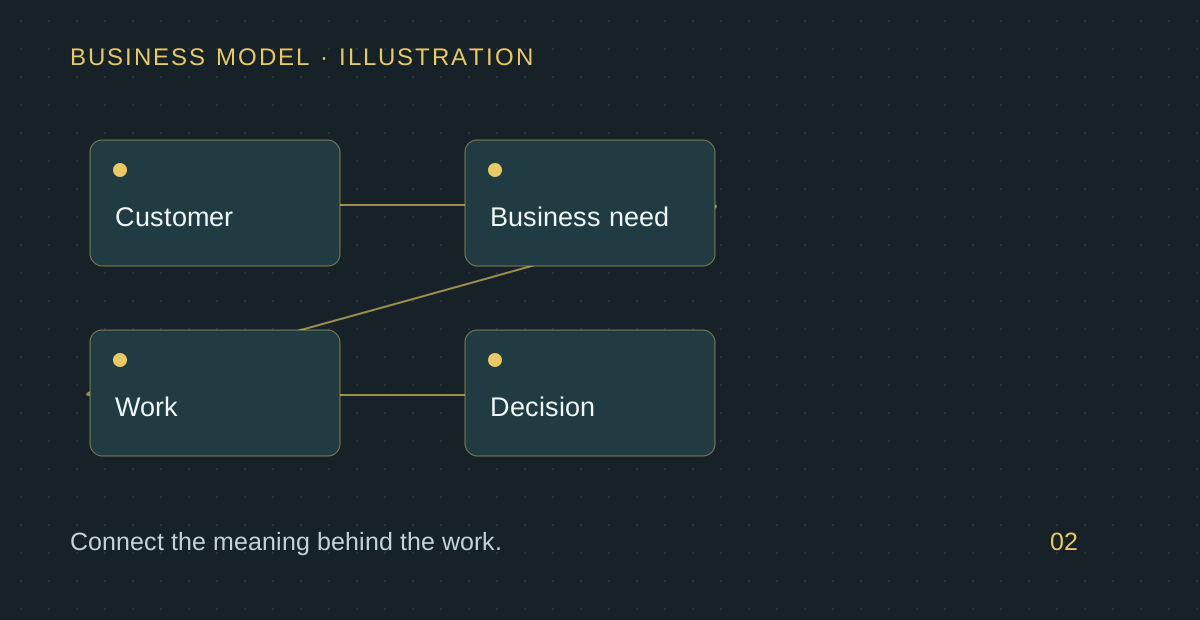
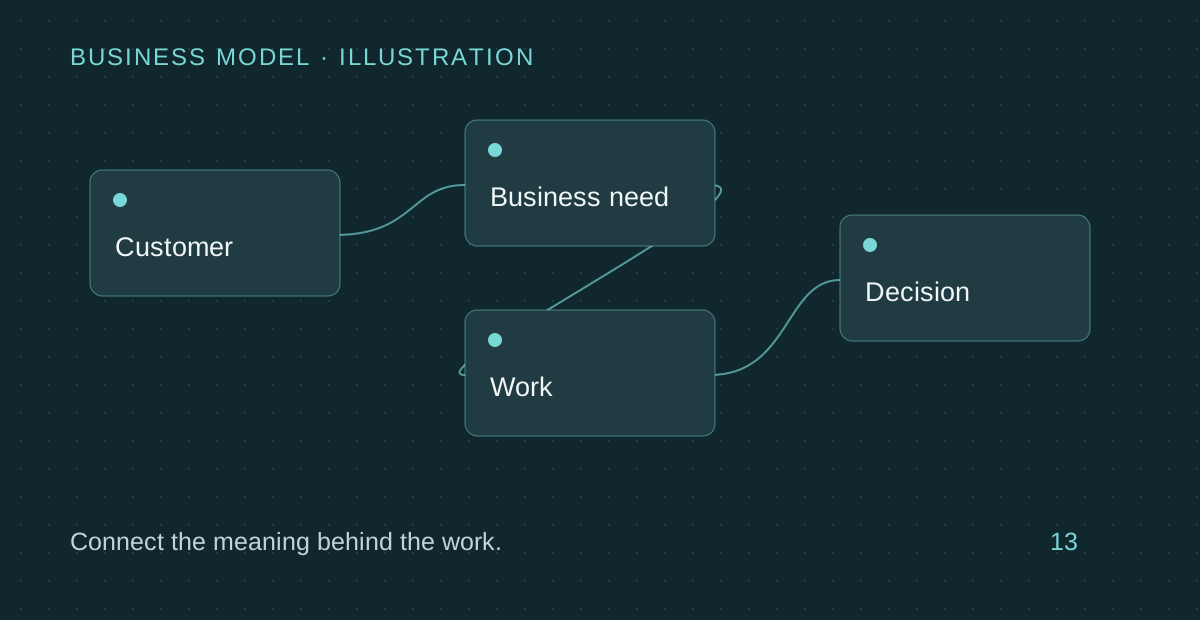
A team imports all its customer and project files successfully. It later discovers that closed meant won in one source and no further action in another. Every item moved, but the combined view now supports incorrect conclusions.
Design the management relationship
Map meanings, identities, relationships and ownership before import. Preserve source identifiers and reconcile ambiguous states. Test a small set of complete business journeys rather than checking only row counts or whether files open.
Build the structured operating model
Map business identities, state meanings, relationships and ownership before transferring information. Preserve original identifiers and provenance so uncertain matches can be reviewed. An imported record should retain its connection to the customer, commitment and history that explain it. Where a rule cannot be carried across, record the gap and its operational consequence. Business acceptance should include representative end-to-end journeys, with exceptions reconciled before users rely on the new view. Successful movement of files is one piece of evidence, not the complete migration result.
The decision for your role
For a CIO, this capability must preserve meaning and authority across systems. Identify which application owns each business fact, which identity performs an action and which role is accountable for its result. A successful transfer of information does not establish a successful business handoff. Compare the state definitions used on each side and decide how disagreements become reviewable exceptions. Keep access rights distinct from screen filters, and distinguish permission to prepare work from permission to change a business system or communicate externally. The operating model should also identify disconnected sources and observation gaps so an incomplete overview is not mistaken for full visibility. Introduce connections in a bounded sequence with representative identities and synthetic information. Test a normal path, an access denial, a stale event and a failed handoff. Give support and recovery duties explicit owners. This allows business managers to govern the purpose and responsibilities while technical teams validate that the intended controls and information flows work in practice.
Apply it in the operating setting
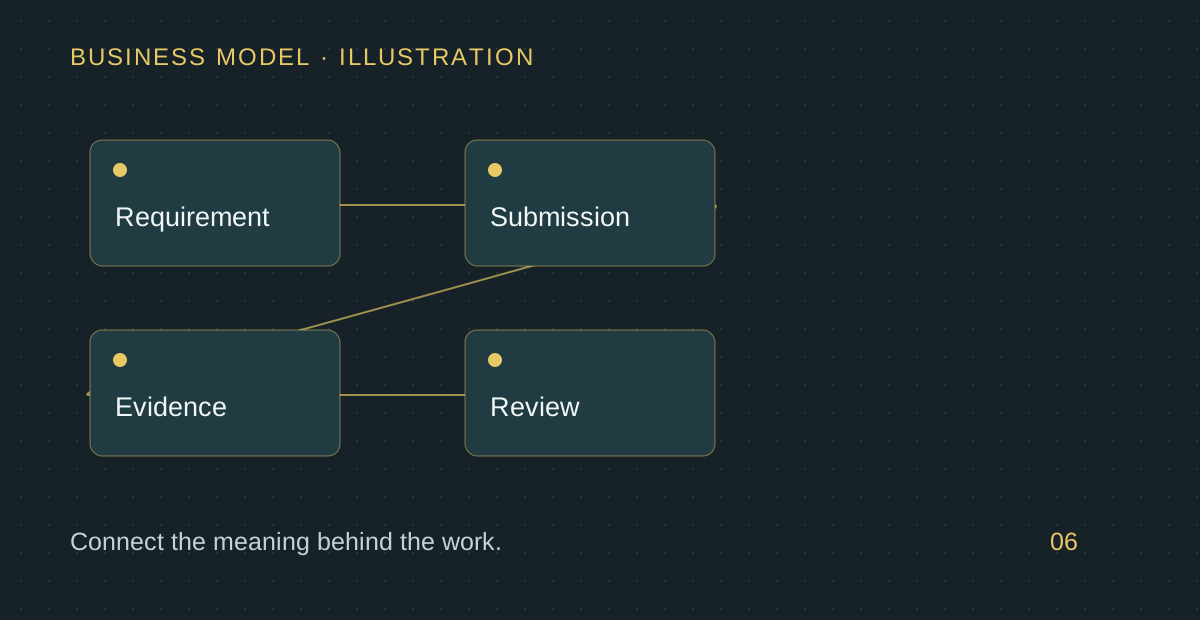
In professional services, the scope of a promise often evolves through meetings and follow-up messages. Use one engagement to connect the customer's request, agreed scope, proposal, delivery responsibilities and acceptance evidence. Keep a proposed change distinct from an authorized variation. When AI assists research or drafting, preserve which claims were verified and which still need a subject expert. A delayed engagement can then be understood through missing decisions or dependencies rather than a generic late status. Assess whether the client-facing owner can explain the current commitment without collecting separate updates from every contributor.
The operating discipline
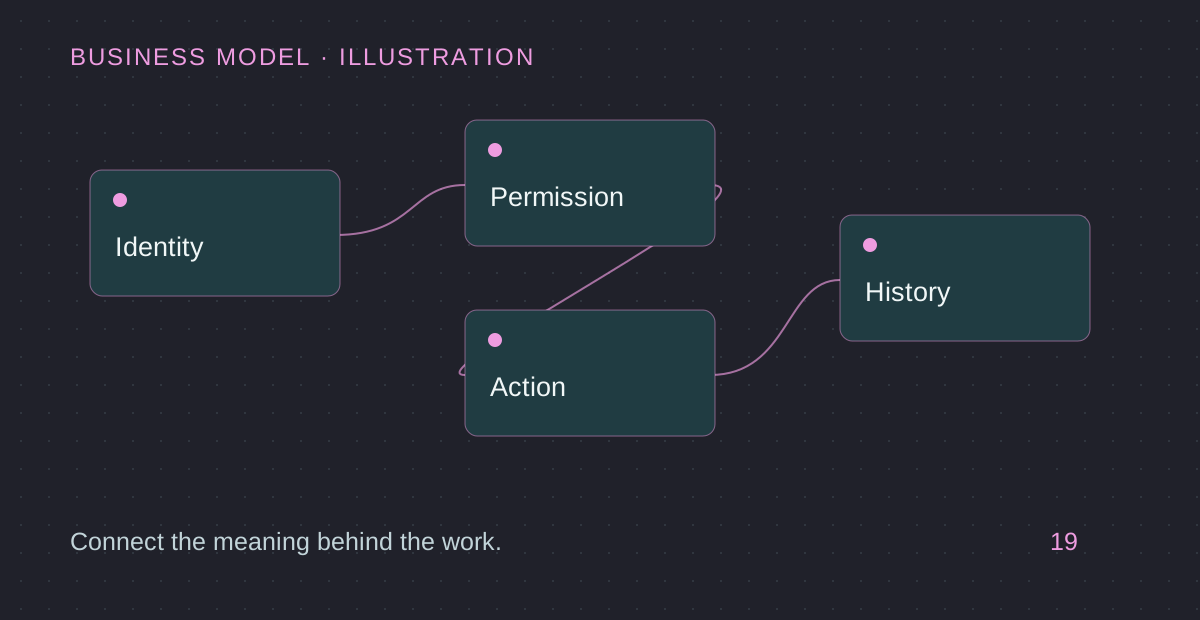
A governance control is useful when people understand its purpose, authority and exception path. Define the business object being controlled, the person accountable for it and the evidence that demonstrates the control worked. Keep the current state distinct from the history of how it changed. An AI suggestion should remain distinguishable from an authorized decision. Test the arrangement with realistic permitted and denied actions, and include a failure case. Documentation alone does not show that an access boundary, approval or recovery process works in practice.
A practical decision example
A representative migration test should include a customer with more than one project, a changed contact and an unresolved request. Ask whether the receiving team can still understand responsibility and history. Count reconciliation exceptions separately from successfully moved items. If a relationship cannot be mapped confidently, preserve it for review rather than attaching it to the nearest-looking record and losing the uncertainty.
Observe, automate and verify responsibly
Before enabling an automatic action, define what the operating history must retain. A useful record identifies the actor, business object, time, reason, authority, relevant input version, observed action and resulting state. Keep a failed attempt separate from a successful retry. If the action sends an email, distinguish preparation, approval, send attempt and delivery observation; attempting to send does not prove that the recipient received or acted on it. Assign an owner for exceptions and say when a human must intervene. Then ask a colleague who was not involved to reconstruct the event using the records alone. Missing context is a model gap to resolve before increasing autonomy. This is how observability supports accountability across people, agents and connected systems, rather than becoming a large collection of unexplained technical logs.
What to test first
Ask owners to verify a customer from initial inquiry through delivery. Record broken relationships, unresolved duplicates and decisions changed by inconsistent definitions.
What this means for Flowise
Flowise is designed around a shared company model: business purpose, relationships, ownership, and results. Start with real work, preserve the supporting evidence, and improve the model as the team learns.