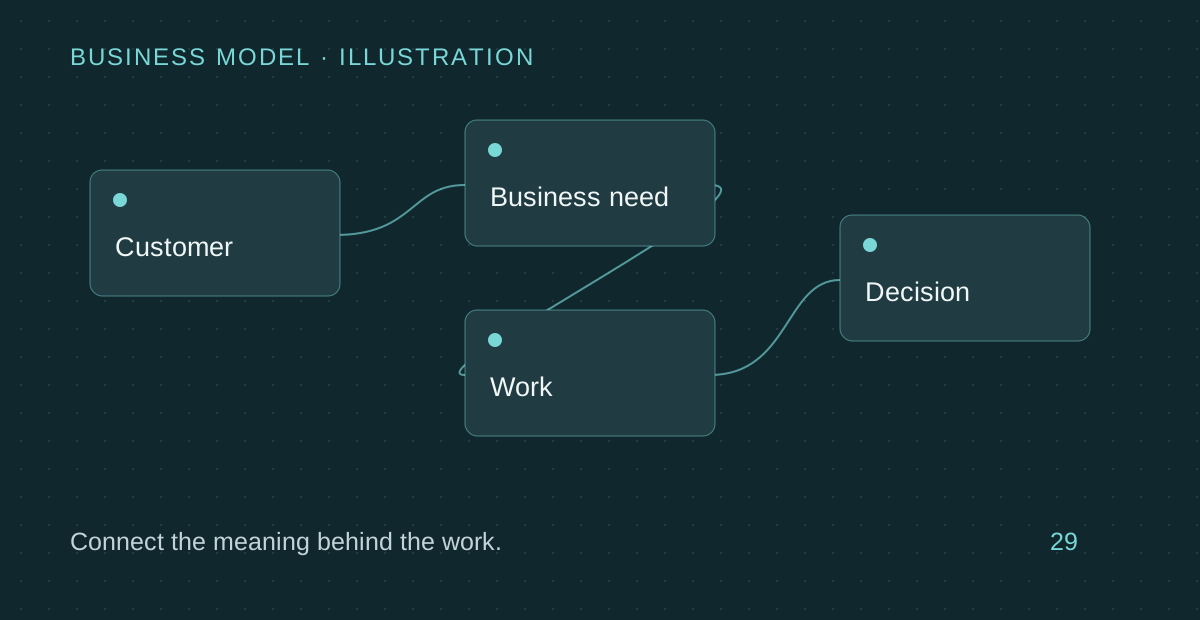
The business problem
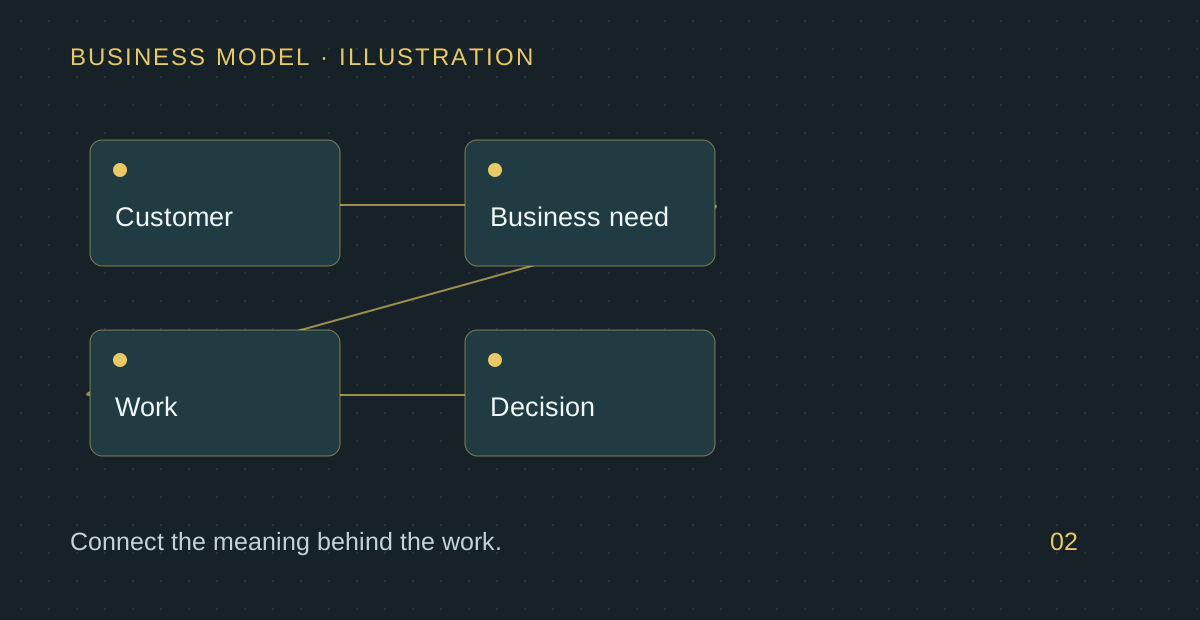
A process-improvement project has all tasks assigned, but the final review depends on an inspection result owned by another team. The dependency is mentioned in a note and never appears in the delivery review. The schedule remains optimistic until late.
Design the management relationship
Record what depends on what, why the dependency exists and which evidence releases it. Assign the dependency owner and the affected outcome. Review changes in readiness explicitly instead of assuming that an earlier due date guarantees availability.
Build the structured operating model
Define the prerequisite as a business condition with an owner and a release test. Link it to the affected commitment and the work that must wait. Distinguish scheduled readiness from observed readiness. If a prerequisite fails verification, the downstream action should remain blocked or follow an explicitly authorized exception. This lets an agent detect relevant changes and prepare coordination, while accountable owners judge the consequence for delivery. The dependency history should show what changed, when it became known and which teams were informed.
The decision for your role
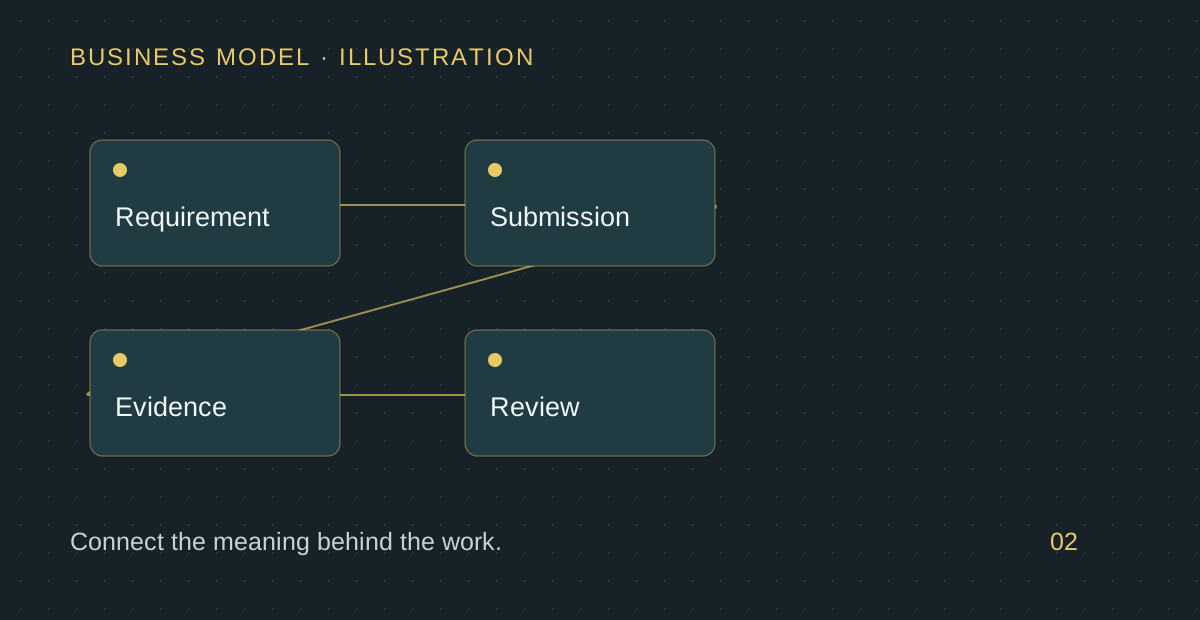
For a CTO, the important connection is between technical action and the business reason it exists. Preserve the accepted requirement, its implementation dependencies, the tests that verify behavior and the production observation that checks the intended result. Those records should remain connected when an agent prepares code or a team changes a design. A task is not fully explained by a repository reference: the responsible engineer also needs to know the affected commitment, operating conditions and acceptance owner. Separate technical readiness from business acceptance, and record which version of a rule or requirement a test represents. When a change fails, use the relationships to distinguish misunderstood intent, implementation error, missing verification and an incorrect operating assumption. Avoid giving an AI more authority simply because it can produce a plausible implementation quickly. Start with one traceable change, test the recovery path and retain the evidence required for another team member to reconstruct the release decision without interviewing its original author.
Apply it in the operating setting
In a manufacturing example, focus on a process-improvement or inspection handoff rather than assuming software can authorize physical production. Connect the relevant item or project, prerequisite, responsible team and acceptance evidence. A planned date does not establish that an inspection condition has passed. Give rejection, missing evidence and delayed readiness explicit paths. The team should be able to identify which commitment is affected and who can decide the next step. Validate the arrangement against the organization's actual operating requirements before relying on it; a linked model by itself does not establish product safety or process compliance.
The operating discipline
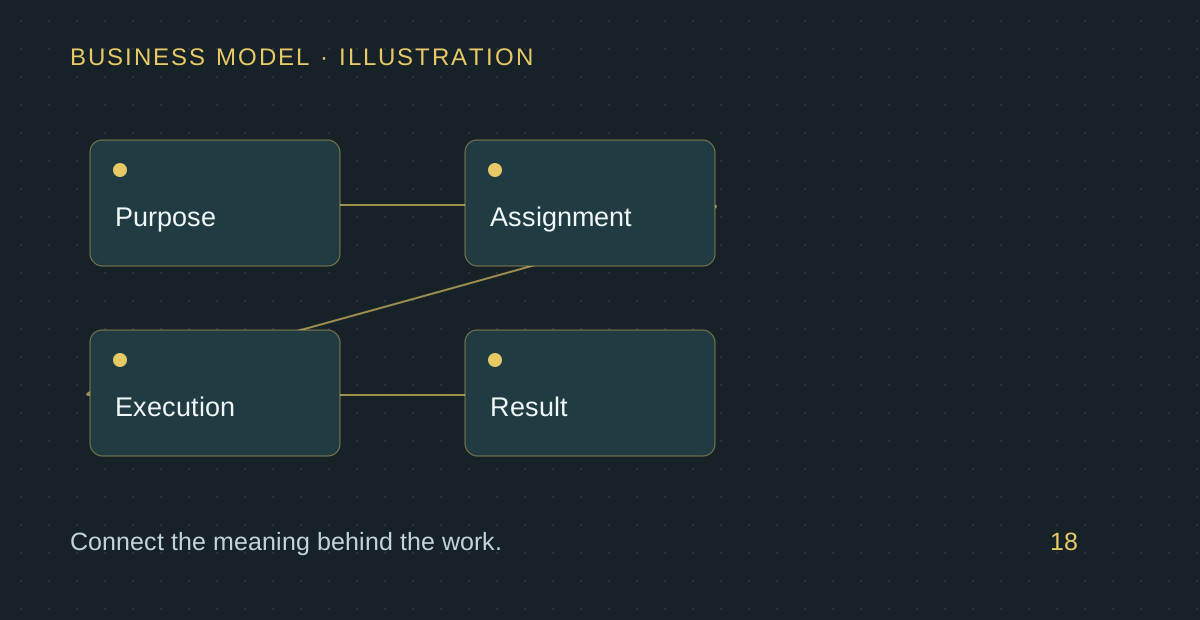
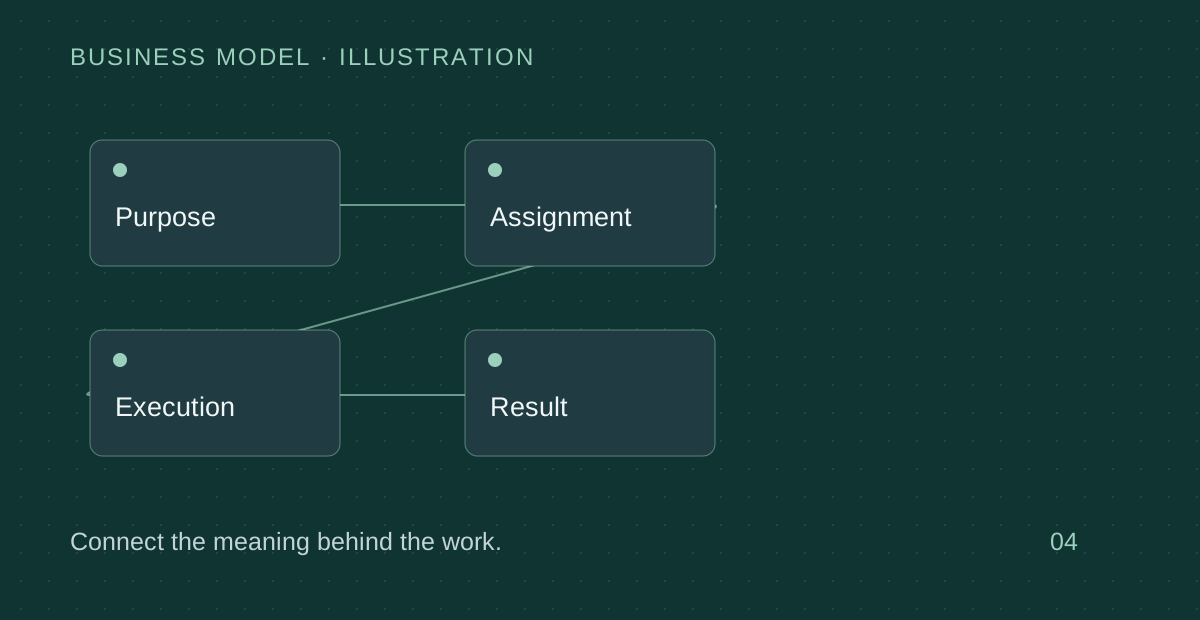
A dependable operating process connects purpose, ownership, state and acceptance. The person doing the work should know what enables the next step, while the reviewer should know what evidence is required. Make blocked and returned work visible without treating every exception as failure by the individual. Some exceptions reveal unclear requests, unrealistic dependencies or weak operating rules. Review the process using a completed case and a failed case. This exposes whether the team can explain what happened and recover, instead of only demonstrating the ideal sequence.
A practical decision example
A dependency can be satisfied by a verified inspection result, not simply by the passage of its planned date. If that result is rejected, the downstream owner needs to know which acceptance condition remains open. Keep the affected commitment linked to the dependency so a technical delay can be discussed in terms of delivery consequence rather than appearing as an isolated status update.
Observe, automate and verify responsibly
Before enabling an automatic action, define what the operating history must retain. A useful record identifies the actor, business object, time, reason, authority, relevant input version, observed action and resulting state. Keep a failed attempt separate from a successful retry. If the action sends an email, distinguish preparation, approval, send attempt and delivery observation; attempting to send does not prove that the recipient received or acted on it. Assign an owner for exceptions and say when a human must intervene. Then ask a colleague who was not involved to reconstruct the event using the records alone. Missing context is a model gap to resolve before increasing autonomy. This is how observability supports accountability across people, agents and connected systems, rather than becoming a large collection of unexplained technical logs.
What to test first
Choose one project and reconstruct its major dependencies with the owners involved. Count previously invisible blockers and distinguish actual readiness from planned dates.
What this means for Flowise
Flowise is designed around a shared company model: business purpose, relationships, ownership, and results. Start with real work, preserve the supporting evidence, and improve the model as the team learns.