The business problem
A delivery date moves in a customer account note. Sales updates its promise, while staffing, invoicing preparation and quality review continue against the earlier plan. Every team acts reasonably using an incomplete picture.
Design the management relationship
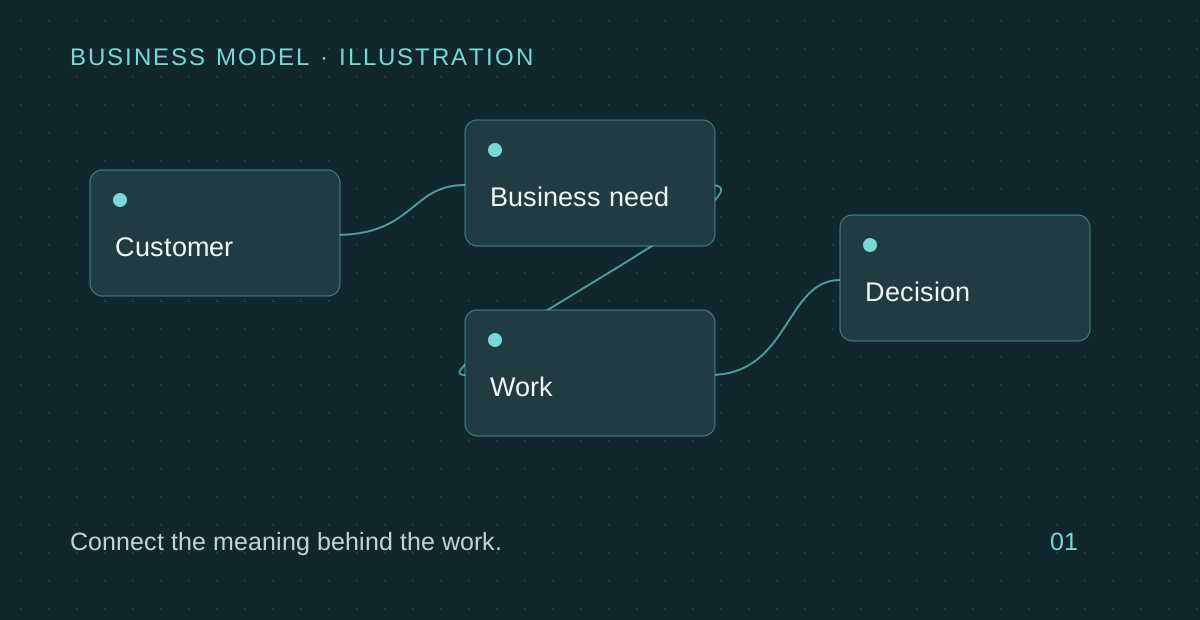
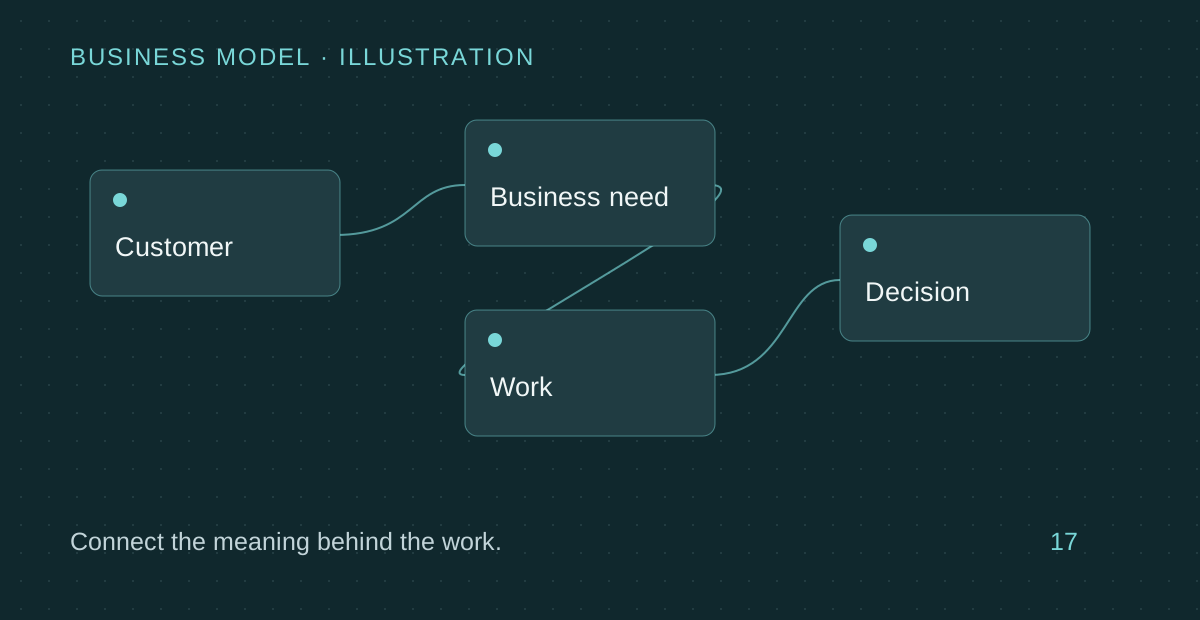
Link the commitment to milestones, dependent tasks, resource plans and approval records. Give changes a reason and effective date. Use the relationship map to identify affected owners and request confirmation instead of broadcasting a vague update to everyone.
Build the structured operating model
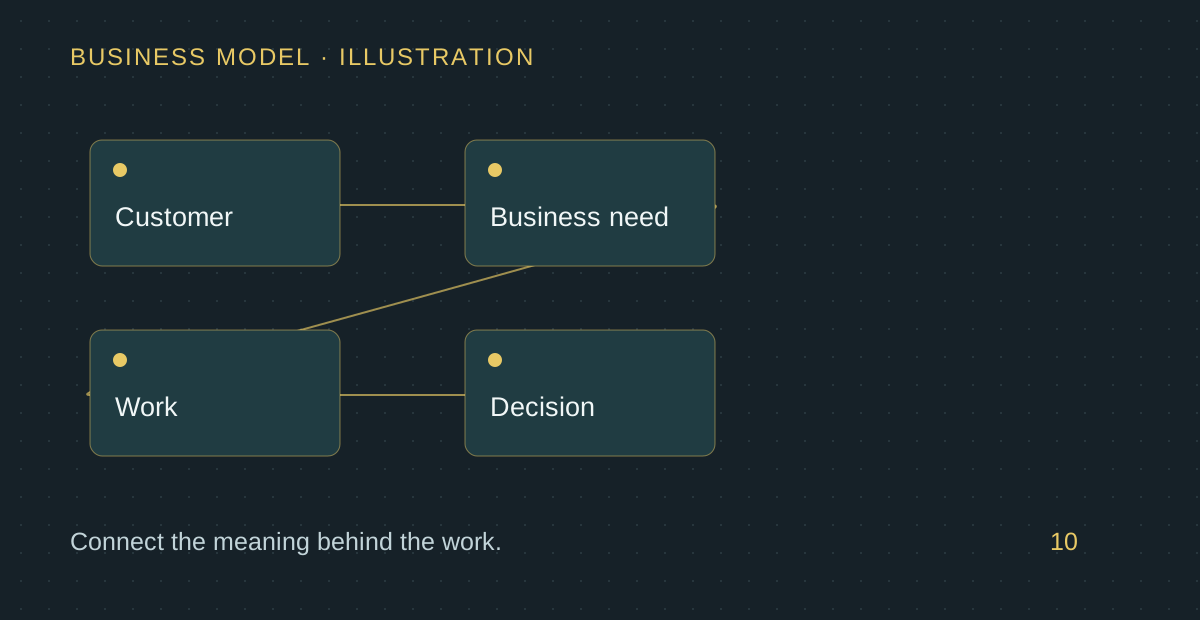
Name the relationship according to its business meaning. A customer requests a change, a commitment depends on an approval, and a deliverable contributes to an outcome; these are different relationships with different consequences. Record the relevant dates and responsible owners where the relationship itself changes. This makes impact questions answerable across systems. An agent can identify linked work for review, while the business owner determines which connections require a changed plan or renewed authorization.
The decision for your role
For a CEO, the value of this capability is a better allocation decision. Ask which objective the work serves, what commitment is exposed if it fails, and what evidence would justify continuing the investment. A large amount of activity can coexist with weak progress, so separate work performed, outputs accepted and business outcomes observed. The executive view should expose important exceptions and unresolved assumptions without requiring the CEO to become the task dispatcher. Establish a review date and a named decision owner, then make it possible to move from the headline to the underlying work. When a person or agent reports success, inspect the relevant result rather than rewarding the confidence of the report. Also record the human time spent clarifying, correcting and verifying the work. This reveals whether apparent automation creates operating leverage or shifts effort into supervision. A useful company model lets the CEO change direction deliberately and identify which commitments, rules and assignments need to change with it.
Apply it in the operating setting
In professional services, the scope of a promise often evolves through meetings and follow-up messages. Use one engagement to connect the customer's request, agreed scope, proposal, delivery responsibilities and acceptance evidence. Keep a proposed change distinct from an authorized variation. When AI assists research or drafting, preserve which claims were verified and which still need a subject expert. A delayed engagement can then be understood through missing decisions or dependencies rather than a generic late status. Assess whether the client-facing owner can explain the current commitment without collecting separate updates from every contributor.
The operating discipline
Start with the decision, then choose the information that makes it possible. A useful management model connects a desired outcome to the assumptions, owners and observations that support action. It should also preserve disagreement: a strong narrative can otherwise hide weak evidence. The operating question is not whether all work has been recorded, but whether a leader can distinguish what is known, what is expected and what still needs judgment. Review frequency should follow the pace and consequence of the decision rather than a reporting habit.
A practical decision example
A date change is not necessarily a change to every downstream activity. Some work may depend on customer approval, while other work depends on available resources. Record the nature of each relationship so impact review can be selective. This is where structured context becomes useful: the organization can ask which commitment changed and why a particular team should act, instead of sending everyone the same instruction.
Observe, automate and verify responsibly
Before enabling an automatic action, define what the operating history must retain. A useful record identifies the actor, business object, time, reason, authority, relevant input version, observed action and resulting state. Keep a failed attempt separate from a successful retry. If the action sends an email, distinguish preparation, approval, send attempt and delivery observation; attempting to send does not prove that the recipient received or acted on it. Assign an owner for exceptions and say when a human must intervene. Then ask a colleague who was not involved to reconstruct the event using the records alone. Missing context is a model gap to resolve before increasing autonomy. This is how observability supports accountability across people, agents and connected systems, rather than becoming a large collection of unexplained technical logs.
What to test first
Reconstruct one recent change. Count affected teams that were identified before work continued and rework caused by late discovery. Better linking should improve change awareness, not add unnecessary messages.
What this means for Flowise
Flowise is designed around a shared company model: business purpose, relationships, ownership, and results. Start with real work, preserve the supporting evidence, and improve the model as the team learns.