The business problem
A learning provider produces separate articles for banking buyers, HR leaders and technology teams. Each article describes the same offer differently, and one quietly adds an unsupported promise. Content volume grows while business consistency weakens.
Design the management relationship
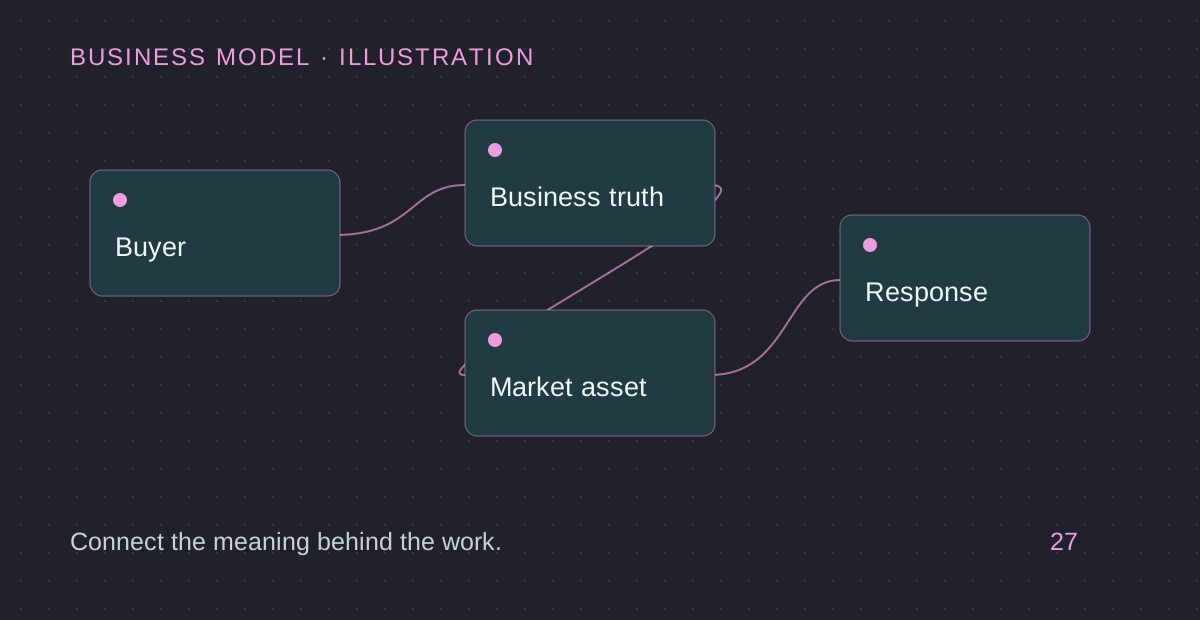
Maintain the underlying offer, problem, audience, evidence and limits as connected editorial records. Change the explanation for each reader while preserving the facts. Give each published article a link to the business truth it draws on and the reviewer who accepted its claims.
Build the structured operating model
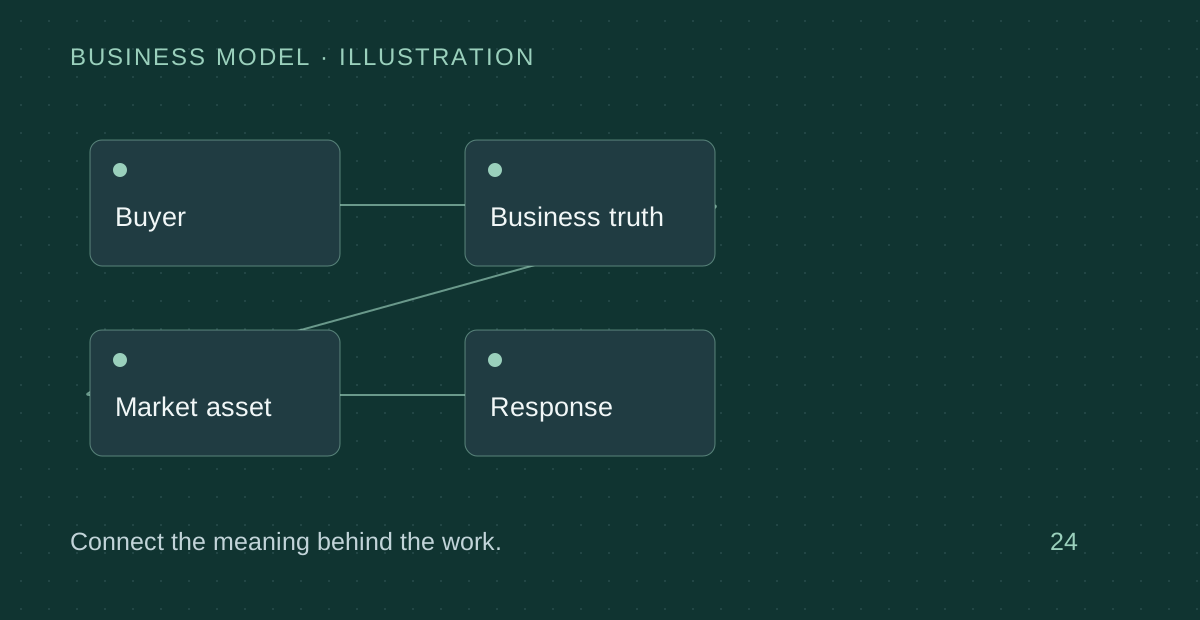
Represent an editorial asset as an explanation of a business truth for a defined reader and question. Link it to the product capability, offer, industry context, evidence and language versions it uses. A changed claim should identify the affected assets for review. Keep permission to use a case or customer detail separate from whether the underlying event occurred. This creates a content operation that can expand business relevance while preserving consistent facts and accountable publication decisions across channels.
The decision for your role
For a CEO, the value of this capability is a better allocation decision. Ask which objective the work serves, what commitment is exposed if it fails, and what evidence would justify continuing the investment. A large amount of activity can coexist with weak progress, so separate work performed, outputs accepted and business outcomes observed. The executive view should expose important exceptions and unresolved assumptions without requiring the CEO to become the task dispatcher. Establish a review date and a named decision owner, then make it possible to move from the headline to the underlying work. When a person or agent reports success, inspect the relevant result rather than rewarding the confidence of the report. Also record the human time spent clarifying, correcting and verifying the work. This reveals whether apparent automation creates operating leverage or shifts effort into supervision. A useful company model lets the CEO change direction deliberately and identify which commitments, rules and assignments need to change with it.
Apply it in the operating setting
In enterprise learning, distinguish content completion, demonstrated understanding and workplace capability. They can be related, but they are not the same result. Use an internal learning or assessment exercise to connect the assigned objective, relevant material, performed task, assessment rubric and reviewer evidence. If AI helps create or evaluate the work, retain its role and the human verification applied. A completion record should state what was actually assessed. This gives the organization a stronger basis for deciding who can prepare, review or authorize a future task, while preserving the limits of any internal recognition.
The operating discipline
Growth work needs the same discipline as delivery: a defined audience, a useful promise, supporting evidence and an accountable next action. Separate reach from relevance and relevance from a qualified opportunity. An article can help a reader understand a problem without producing an immediate inquiry, so avoid judging every asset by one short-term measure. At the same time, publishing volume alone cannot establish business value. Keep the content purpose and its relationship to the offer explicit, then use observed reader and customer behavior to refine the next decision.
A practical decision example
For one courseware offer, an HR article can explain workforce capability while a technology article explains integration responsibilities. Both should draw from the same confirmed offer and evidence. Their difference belongs in the reader's decision, example and next action. When the offer changes, identify the affected articles through their relationship to that offer instead of searching for every phrase that might mention it.
Observe, automate and verify responsibly
Before enabling an automatic action, define what the operating history must retain. A useful record identifies the actor, business object, time, reason, authority, relevant input version, observed action and resulting state. Keep a failed attempt separate from a successful retry. If the action sends an email, distinguish preparation, approval, send attempt and delivery observation; attempting to send does not prove that the recipient received or acted on it. Assign an owner for exceptions and say when a human must intervene. Then ask a colleague who was not involved to reconstruct the event using the records alone. Missing context is a model gap to resolve before increasing autonomy. This is how observability supports accountability across people, agents and connected systems, rather than becoming a large collection of unexplained technical logs.
What to test first
Compare several versions of one offer across audiences. Track unsupported claims, contradictory statements and revision effort when the offer changes. Relevance should increase without multiplying incompatible truths.
What this means for Flowise
Flowise is designed around a shared company model: business purpose, relationships, ownership, and results. Start with real work, preserve the supporting evidence, and improve the model as the team learns.