The business problem
An AI agent produces a polished report and marks its task complete. The report omits the country scope and contains no source evidence. The output exists, yet the business requirement has not been satisfied.
Design the management relationship
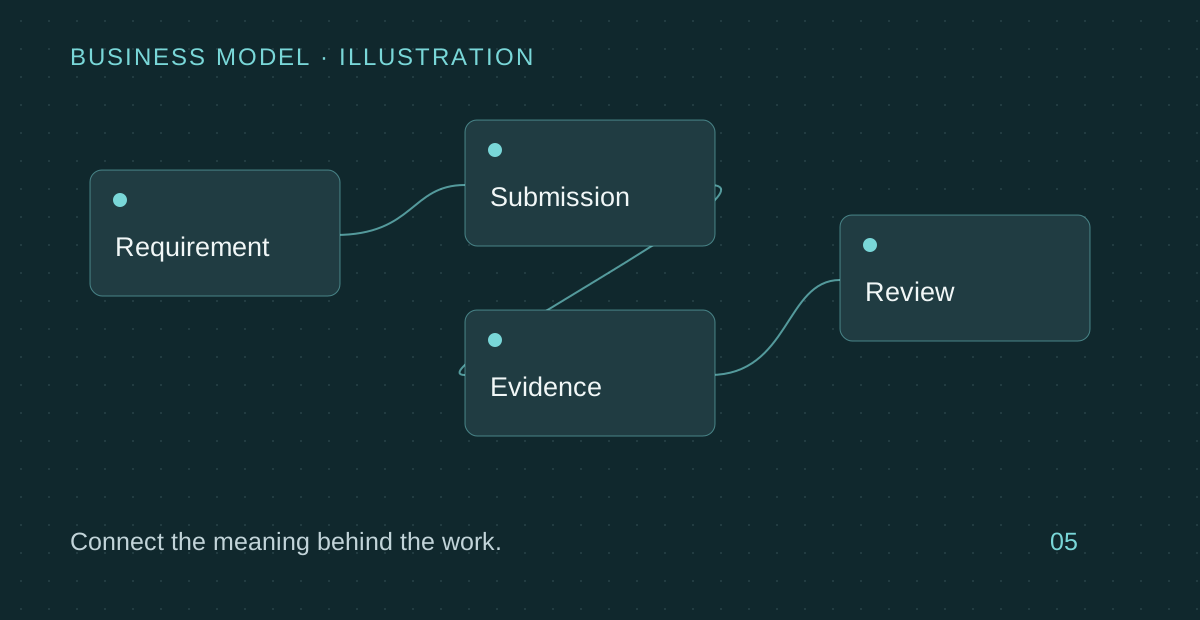
Define completion criteria before assigning work: required scope, output form, evidence and acceptance authority. Separate submitted, under review, accepted and returned states. Let the reviewer explain which criterion failed instead of resetting the task without a reason.
Build the structured operating model
Define each criterion as a testable statement linked to the requested outcome. Identify required evidence, the reviewer and any critical condition that prevents acceptance. Preserve the criterion version used for the assignment. The agent or human executor submits an output against that version; the reviewer records pass, fail or insufficient evidence for each requirement. A change to the business request should trigger a review of the criteria rather than quietly changing the meaning of done after work has been submitted.
The decision for your role
For a CEO, the value of this capability is a better allocation decision. Ask which objective the work serves, what commitment is exposed if it fails, and what evidence would justify continuing the investment. A large amount of activity can coexist with weak progress, so separate work performed, outputs accepted and business outcomes observed. The executive view should expose important exceptions and unresolved assumptions without requiring the CEO to become the task dispatcher. Establish a review date and a named decision owner, then make it possible to move from the headline to the underlying work. When a person or agent reports success, inspect the relevant result rather than rewarding the confidence of the report. Also record the human time spent clarifying, correcting and verifying the work. This reveals whether apparent automation creates operating leverage or shifts effort into supervision. A useful company model lets the CEO change direction deliberately and identify which commitments, rules and assignments need to change with it.
Apply it in the operating setting
In a cross-functional company, the same request can appear in sales, delivery and support with different meanings. Choose one real customer or internal commitment and trace it across those boundaries. Preserve the identity of the commitment while allowing each team its own relevant view. Record where the meaning of complete changes, who owns each transition and which evidence another team needs. This example is deliberately independent of any particular software stack: the management model should remain understandable when a tool is replaced. The pilot succeeds when the next team can act using the linked context and the accountable owner can explain the observed result.
The operating discipline
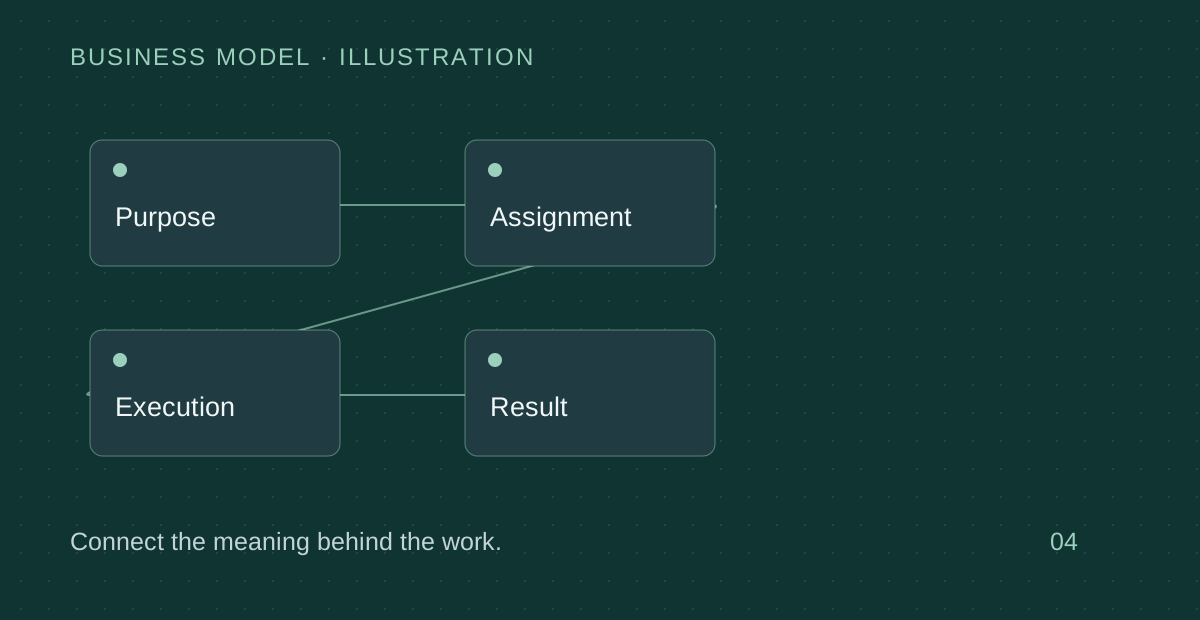
A dependable operating process connects purpose, ownership, state and acceptance. The person doing the work should know what enables the next step, while the reviewer should know what evidence is required. Make blocked and returned work visible without treating every exception as failure by the individual. Some exceptions reveal unclear requests, unrealistic dependencies or weak operating rules. Review the process using a completed case and a failed case. This exposes whether the team can explain what happened and recover, instead of only demonstrating the ideal sequence.
A practical decision example
Imagine the task is to prepare a market briefing for one country. Acceptance might require the stated country scope, dated sources, a distinction between observations and recommendations, and a named reviewer. A report that fails the source requirement should return with that reason. The correction loop becomes a learning record: repeated omissions may indicate that the assignment or its supporting context needs redesign.
Observe, automate and verify responsibly
Before enabling an automatic action, define what the operating history must retain. A useful record identifies the actor, business object, time, reason, authority, relevant input version, observed action and resulting state. Keep a failed attempt separate from a successful retry. If the action sends an email, distinguish preparation, approval, send attempt and delivery observation; attempting to send does not prove that the recipient received or acted on it. Assign an owner for exceptions and say when a human must intervene. Then ask a colleague who was not involved to reconstruct the event using the records alone. Missing context is a model gap to resolve before increasing autonomy. This is how observability supports accountability across people, agents and connected systems, rather than becoming a large collection of unexplained technical logs.
What to test first
Compare submitted tasks with accepted tasks and inspect repeat rejection reasons. A rising completion count is useful only when accepted work meets the original business need.
What this means for Flowise
Flowise is designed around a shared company model: business purpose, relationships, ownership, and results. Start with real work, preserve the supporting evidence, and improve the model as the team learns.