The business problem
A completion badge says a person or agent passed an assessment, but the underlying task, evidence and conditions are absent. The badge becomes a decorative label and cannot support a reliable assignment decision.
Design the management relationship
Link internal recognition to demonstrated work, assessment criteria, issuer, scope and review date. Explain when changed tools or business rules require reassessment. Internal recognition should not imply external accreditation or a professional qualification.
Build the structured operating model
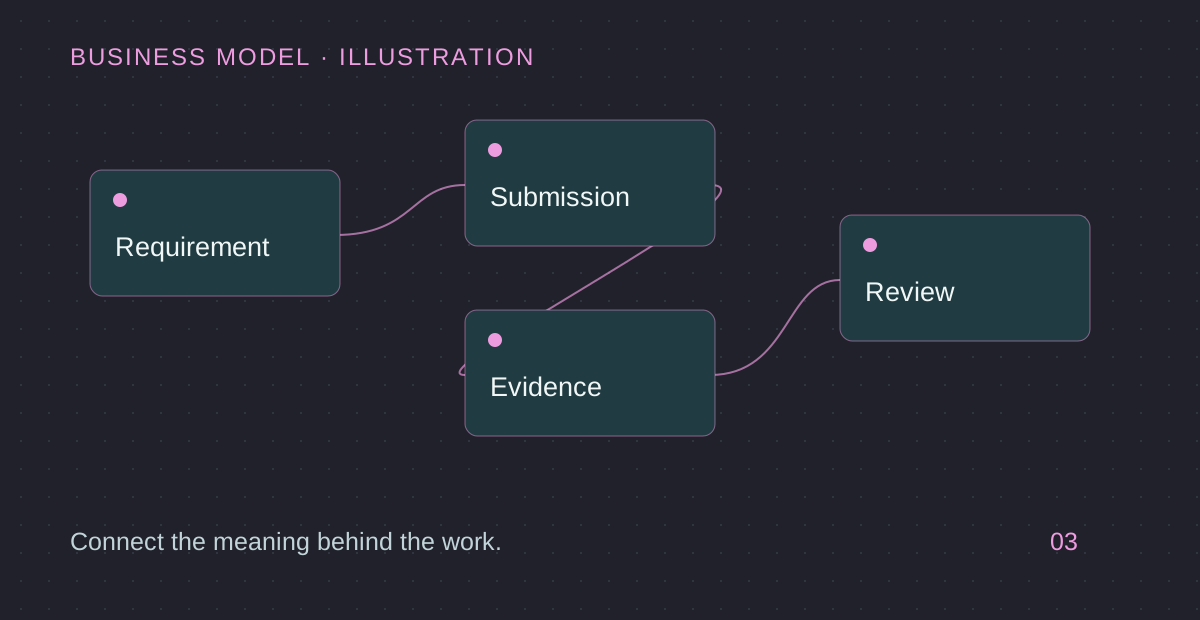
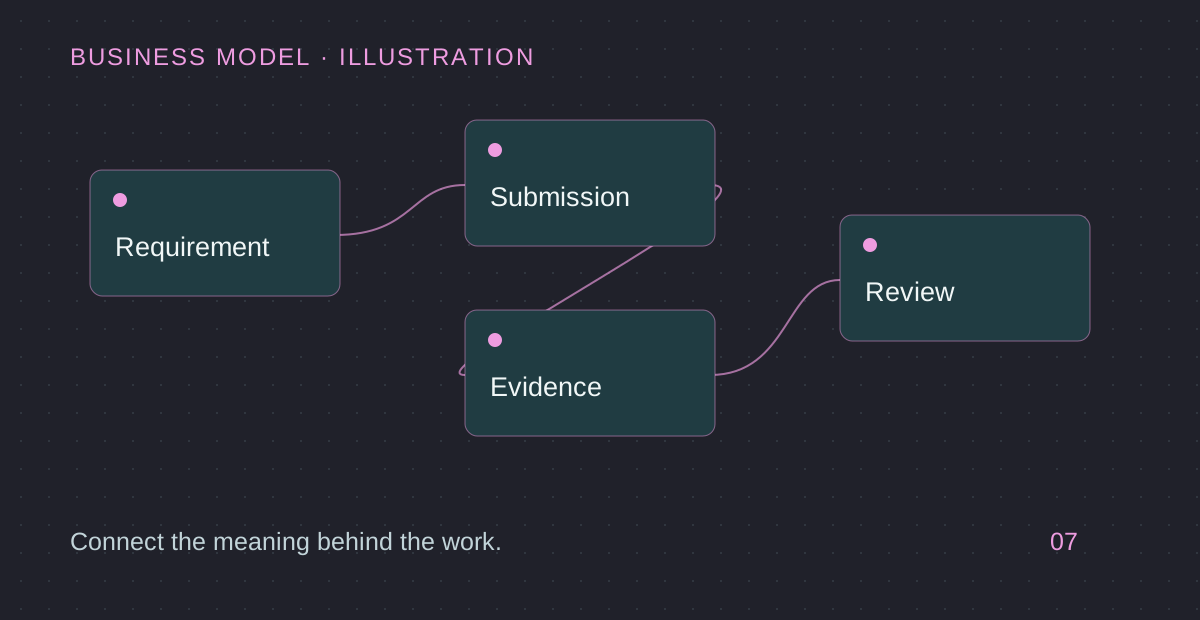
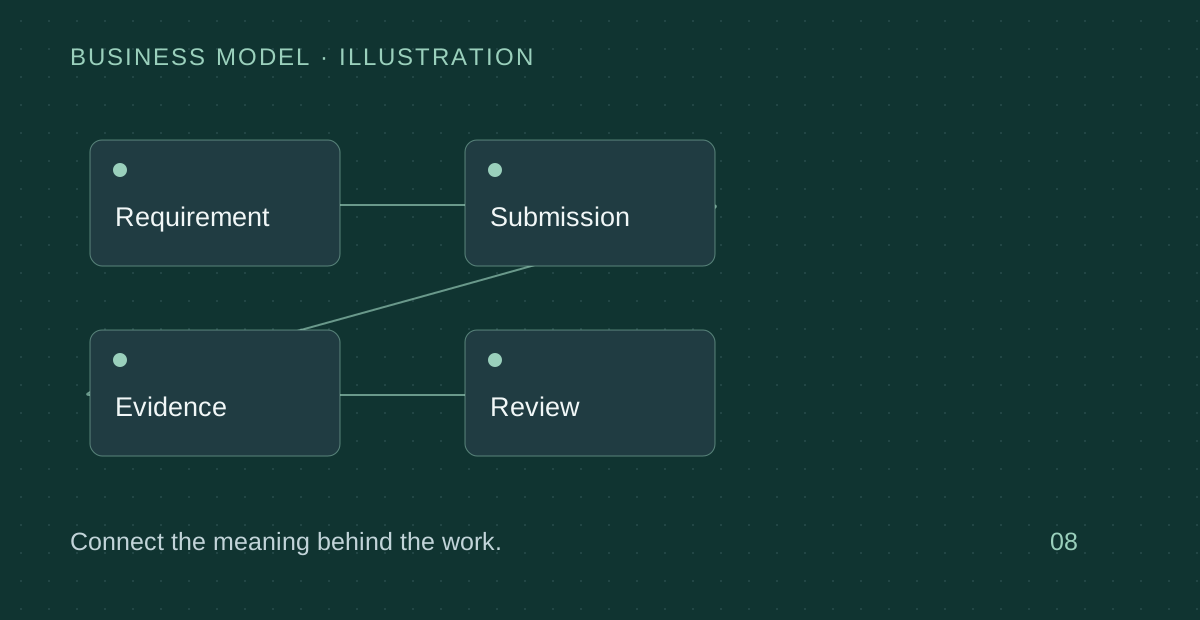
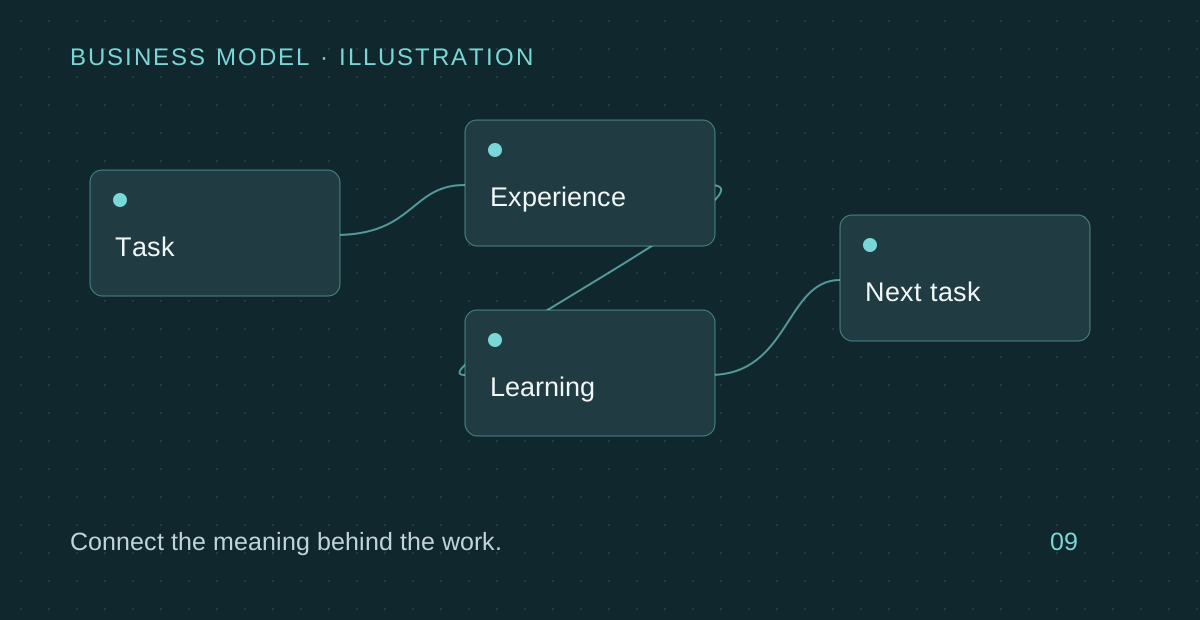
Connect internal recognition to the assessed capability, specific work, assessment method, issuer and validity conditions. State whether the recognition concerns preparing, reviewing or authorizing work. Keep withdrawal and reassessment events in its history. If the tool or policy changes materially, identify the affected recognitions instead of assuming indefinite validity. A business owner should be able to inspect what the recognition proves before relying on it for an assignment. This supports organizational capability management without presenting internal recognition as external accreditation.
The decision for your role
For an HR leader, this capability should help describe the capacity of people and agents working together. Record the task family, supervision required, business context and demonstrated result before assigning a capability label. Access to an AI tool does not prove that a person can evaluate its output, and a successful output does not prove that an agent can repeat the work under different conditions. Keep the contribution of the preparer, reviewer and approver distinct. Record correction effort and rejected work as well as accepted results, then use the pattern to design training, support and assignments. Avoid converting every operational observation into an employee ranking. Where comparative evaluation is useful, agree on purpose, comparable work and the chance to correct inaccurate records. A change in tools, policy or context can require reassessment. The aim is a defensible view of organizational capability that supports development and responsible delegation, with the limits of each assessment visible to the people making assignments.
Apply it in the operating setting
In enterprise learning, distinguish content completion, demonstrated understanding and workplace capability. They can be related, but they are not the same result. Use an internal learning or assessment exercise to connect the assigned objective, relevant material, performed task, assessment rubric and reviewer evidence. If AI helps create or evaluate the work, retain its role and the human verification applied. A completion record should state what was actually assessed. This gives the organization a stronger basis for deciding who can prepare, review or authorize a future task, while preserving the limits of any internal recognition.
The operating discipline
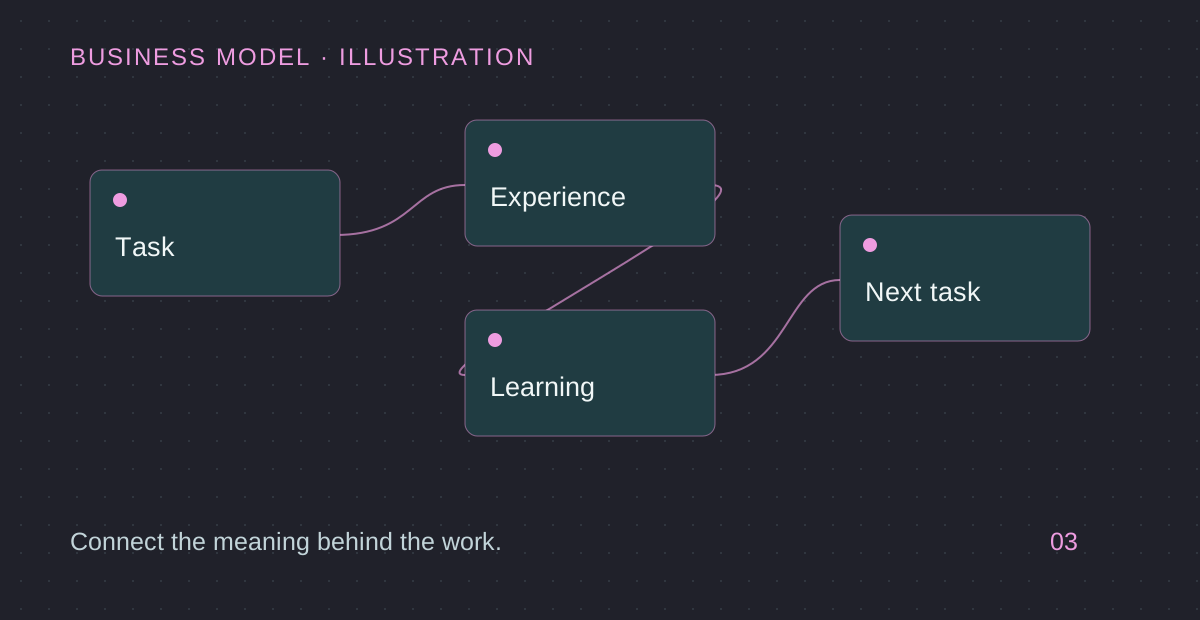
Capability should be assessed against the work a person-and-machine arrangement is expected to perform. Record the task family, relevant context, assistance used and acceptance standard. Avoid treating tool access as evidence of competence or a single successful output as proof of consistent performance. Keep reviewer effort visible: apparent automation may depend on substantial human correction. The goal is to understand reliable capacity, including its limits, so future assignments reflect demonstrated ability. Use the history to improve training, task design and review support rather than turning every observation into a simplistic leaderboard.
A practical decision example
An internal recognition record might state that a team completed a defined proposal-review exercise using a particular rubric. It should link the assessed output and reviewer decision, and say whether the recognition concerns preparation, checking or approval. If the process later changes, the record remains a valid history of that assessment but may no longer support the same future assignment.
Observe, automate and verify responsibly
Before enabling an automatic action, define what the operating history must retain. A useful record identifies the actor, business object, time, reason, authority, relevant input version, observed action and resulting state. Keep a failed attempt separate from a successful retry. If the action sends an email, distinguish preparation, approval, send attempt and delivery observation; attempting to send does not prove that the recipient received or acted on it. Assign an owner for exceptions and say when a human must intervene. Then ask a colleague who was not involved to reconstruct the event using the records alone. Missing context is a model gap to resolve before increasing autonomy. This is how observability supports accountability across people, agents and connected systems, rather than becoming a large collection of unexplained technical logs.
What to test first
Ask an assignment owner what a certificate permits them to conclude. If they cannot identify its limits, improve the evidence and scope before using it in capability planning.
What this means for Flowise
Flowise is designed around a shared company model: business purpose, relationships, ownership, and results. Start with real work, preserve the supporting evidence, and improve the model as the team learns.